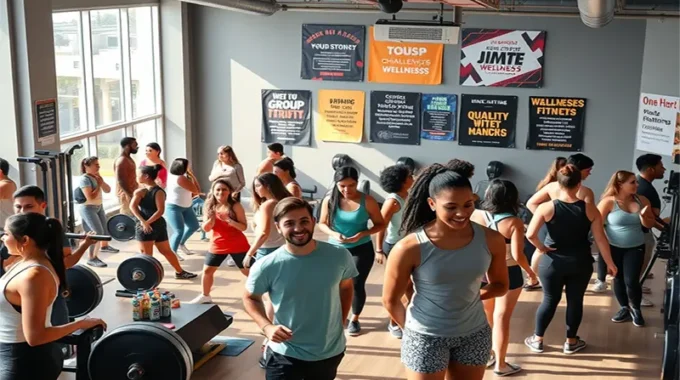
Community-Focused Fitness Gym with Social Wellness Events and Group Challenges

In the modern urban landscape, we are more digitally connected than ever, yet we are experiencing an epidemic of “social isolation.” For many, the traditional gym has unintentionally contributed to this, designed as a row of isolated silos where members wear noise-canceling headphones and avoid eye contact.

However, a new movement is reclaiming the gym as a vital “Third Space”—a location outside of home (the first space) and work (the second space) where human connection is the primary driver of health. By integrating social wellness into the fabric of fitness, community-focused gyms are proving that a strong support network is just as essential to longevity as a strong cardiovascular system.

The Longevity of Connection: Why Social Wellness Matters

Social wellness is not just a “nice-to-have” feature; it is a biological necessity. The famous Harvard Study of Adult Development, which has tracked individuals for over 80 years, concluded that the …
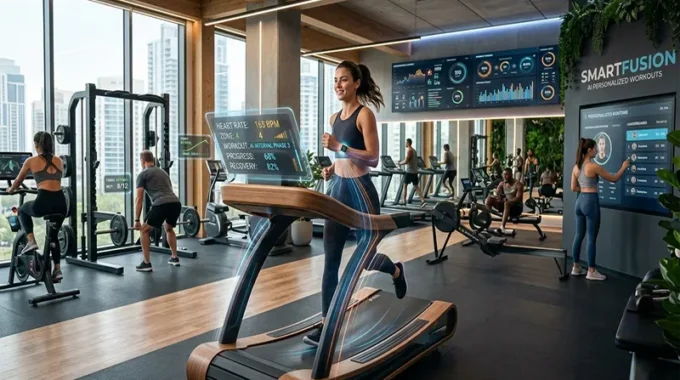
Smart Fitness Gym with AI Personalized Workouts and Wearable Data Syncing

The fitness industry is currently undergoing its most significant transformation since the invention of the barbell. For decades, the gym experience was defined by “one-size-fits-all” circuit training or the hit-or-miss nature of human-led personal training. Today, we are witnessing the rise of the Smart Gym—a high-tech ecosystem where artificial intelligence (AI) and wearable data converge to create a fitness experience that is as unique as a fingerprint.

In this new era, the gym is no longer just a collection of cold iron and treadmills; it is a responsive, data-driven partner in a member’s health journey. By leveraging AI and seamless wearable syncing, these facilities are solving the two greatest hurdles in fitness: lack of personalization and the “guessing game” of recovery.

AI: The Personal Trainer in the Machine

The “Smart” in a modern gym refers to an underlying AI engine that acts as a digital head coach. Unlike traditional …

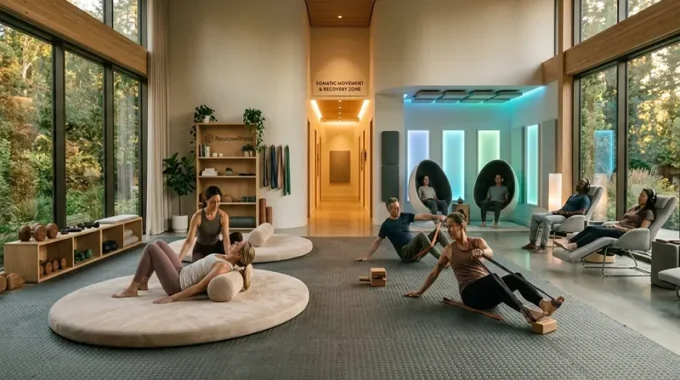
Neurowellness Gym Facilities: Somatic Movement and Nervous System Recovery

For decades, the fitness industry has operated under a “musculoskeletal-first” paradigm. The metrics of success were external: pounds lifted, miles run, or inches lost. In this model, the body is treated like a mechanical machine, and the mind is simply the “driver” pushing it toward exhaustion.

However, a revolutionary shift is occurring. We are entering the era of the Neurowellness Gym—a facility that recognizes that the brain is the “Central Governor” of all human performance. In these spaces, the focus shifts from the muscle to the message; from the joint to the signal. By integrating somatic movement and nervous system recovery, these facilities are redefining what it means to be “fit” for the modern world.

Defining the Neurowellness Paradigm

The fundamental difference between a traditional gym and a Neurowellness facility lies in the hierarchy of training. In a Neurowellness model, we understand that the nervous system is the gatekeeper …

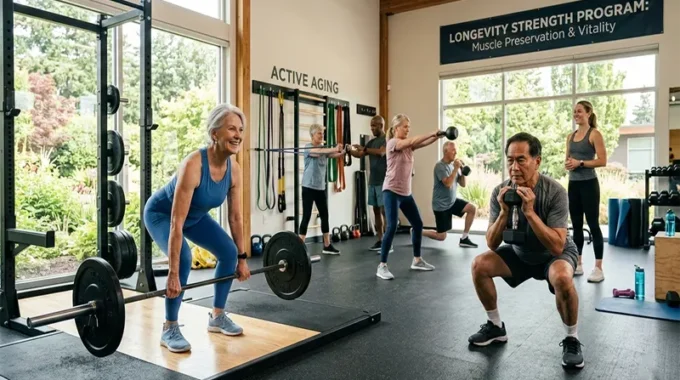
Longevity Strength Training Programs for Active Aging and Muscle Preservation

As the calendar turns, the conversation around health often shifts from performance to preservation. However, the emerging science of longevity suggests that preservation is not passive; it requires active engagement in building and maintaining muscle. In the fight against aging, strength training is not just a luxury; it is the single most powerful antidote to the physical decline often deemed inevitable.

For older adults, the goal of exercise is to maintain a high quality of life—retaining the ability to carry groceries, climb stairs, and play with grandchildren. This is achieved through a structured longevity strength training program designed to optimize “healthspan” (the years spent in good health), not just “lifespan.”

The Biological Case for Resistance

To understand why lifting weights is critical, we must define the two primary villains of aging: sarcopenia and dynapenia.

  • Sarcopenia is the involuntary, age-related loss of skeletal muscle mass. Starting as early as age 30,

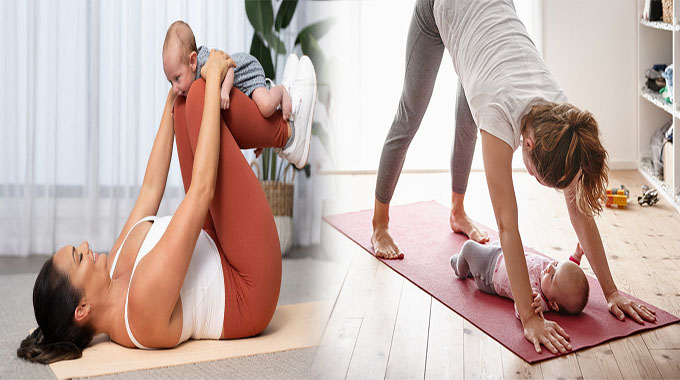
Customized Workout Routines for Post-Pregnancy Weight Loss

Losing weight after pregnancy can be a challenging task for many new mothers. It’s important to approach post-pregnancy weight loss with a healthy and realistic mindset, focusing on gradually shedding the extra pounds while ensuring the overall well-being of both mom and baby.

One effective approach to post-pregnancy weight loss is through customized workout routines tailored to the specific needs and limitations of new mothers. These routines take into account factors such as the stage of recovery, fitness level, body composition, and any unique considerations related to the pregnancy or delivery.

The Importance of Customization

Every woman’s post-pregnancy weight loss journey is unique, and it’s crucial to remember that there is no one-size-fits-all solution. A customized workout routine ensures that exercises are tailored to the individual’s specific goals and needs, while also taking into account any medical advice or restrictions provided by healthcare professionals.

Consulting with Professionals

Before embarking on …