Cycle-Aware Nutrition and Sprint Interval Training for Hormonal Balance

For decades, the fitness and nutrition industries have relied on research primarily conducted on men, leading to a “one-size-fits-all” approach that treats the human body as a linear system. However, for women of reproductive age, biology is cyclical. A woman’s metabolic rate, insulin sensitivity, and recovery capacity shift significantly every few days as estrogen and progesterone rise and fall.

By aligning your nutrition and high-intensity exercise—specifically Sprint Interval Training (SIT)—with these hormonal shifts, you can stop fighting your body and start working with it. This “cycle-syncing” approach is the key to achieving body composition goals without triggering the hormonal burnout, fatigue, and cycle irregularities often caused by traditional overtraining.

The Biological Rhythm: A Four-Phase Overview

To master cycle-aware training, we must first understand the internal environment. The menstrual cycle is generally divided into two main halves: the Follicular Phase (low hormone) and the Luteal Phase (high hormone).

  1. Menstrual Phase (Days

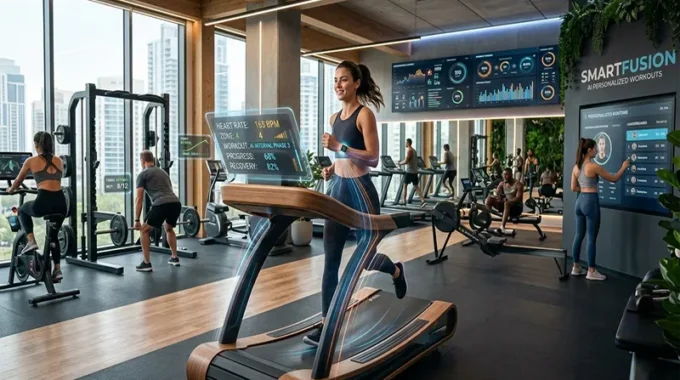
Smart Fitness Gym with AI Personalized Workouts and Wearable Data Syncing

The fitness industry is currently undergoing its most significant transformation since the invention of the barbell. For decades, the gym experience was defined by “one-size-fits-all” circuit training or the hit-or-miss nature of human-led personal training. Today, we are witnessing the rise of the Smart Gym—a high-tech ecosystem where artificial intelligence (AI) and wearable data converge to create a fitness experience that is as unique as a fingerprint.

In this new era, the gym is no longer just a collection of cold iron and treadmills; it is a responsive, data-driven partner in a member’s health journey. By leveraging AI and seamless wearable syncing, these facilities are solving the two greatest hurdles in fitness: lack of personalization and the “guessing game” of recovery.

AI: The Personal Trainer in the Machine

The “Smart” in a modern gym refers to an underlying AI engine that acts as a digital head coach. Unlike traditional …

Nervous System Regulation Tips for Women with Chronic Stress and Fatigue

In our modern, high-speed world, women are often praised for being “superhuman”—balancing careers, domestic labor, and social emotional work. However, this sustained pressure often leads to a specific kind of physiological depletion. When stress becomes chronic, it is no longer just about “feeling busy”; it becomes a state of biological exhaustion that impacts every system in the body.

For women experiencing chronic fatigue, the traditional advice of “just get more sleep” or “go for a run” often misses the mark. If your nervous system is stuck in a state of survival, your body cannot effectively use sleep for repair, and high-intensity exercise can actually deepen the fatigue. True recovery begins with nervous system regulation.

Understanding the “Functional Freeze” State

Many women struggling with chronic stress describe a confusing sensation: they feel “tired but wired.” This is often a sign of being in Functional Freeze (technically known as the Dorsal …

Neurowellness Gym Facilities: Somatic Movement and Nervous System Recovery

For decades, the fitness industry has operated under a “musculoskeletal-first” paradigm. The metrics of success were external: pounds lifted, miles run, or inches lost. In this model, the body is treated like a mechanical machine, and the mind is simply the “driver” pushing it toward exhaustion.

However, a revolutionary shift is occurring. We are entering the era of the Neurowellness Gym—a facility that recognizes that the brain is the “Central Governor” of all human performance. In these spaces, the focus shifts from the muscle to the message; from the joint to the signal. By integrating somatic movement and nervous system recovery, these facilities are redefining what it means to be “fit” for the modern world.

Defining the Neurowellness Paradigm

The fundamental difference between a traditional gym and a Neurowellness facility lies in the hierarchy of training. In a Neurowellness model, we understand that the nervous system is the gatekeeper …

How to Protect Ovarian Health for Long-Term Longevity and Disease Prevention

In the field of longevity science, the ovaries are increasingly recognized as the “canary in the coal mine” for a woman’s biological aging. While most organs in the human body are designed to function for eight decades or more, the ovaries undergo a dramatic decline in function by mid-life. This transition—menopause—is not merely the end of reproductive capacity; it is a systemic shift that impacts bone density, cardiovascular health, and cognitive function.

Protecting ovarian health is, therefore, not just about fertility; it is a foundational strategy for long-term disease prevention and extending “healthspan.” By understanding the mechanisms that accelerate ovarian aging, we can implement proactive lifestyle, metabolic, and environmental shields to preserve these vital endocrine organs.

The Ovarian-Longevity Connection

The ovaries are the primary producers of estrogen and progesterone, hormones that serve as systemic “protectors.” Estrogen, in particular, is a master regulator of metabolic health. It maintains the elasticity of …